Summary
 The Sigma 35mm f2 DG DN is a mild wide prime lens for full-frame mirrorless cameras and available in Sony-e and Leica L-mounts. IT becomes Sigma's second 35mm to get me really excited about shooting this focal distance, following the f1.2 Artwork. While I love the 1.2 for its unparalleled shallow depth-of-field of battle personal effects, the f2 is simply more affordable and practical, while sporting a degree of charm remove from most modern lenses. IT eschews the typically bland, featureless plastic barrels for something altogether classier with metallic-looking construction, a manual aperture ring, weather-sealing and attractive particularisation including a metal lens cowl and a fun magnetic cap (besides atomic number 3 a Sir Thomas More traditional shaping one). The optics are sharp into the corners big-outdoors and capable of attractive bokeh. I also enjoyed the minimum focusing outstrip, allowing me to get shut down to smaller subjects and inside information. Beyond a little coloured fringing along some blurred high contrast subjects like branches against an overcast sky, there's non a great deal to complain about. Its biggest issue is joining a packed market of 35s, especially in the Sony saddle horse - the similarly-priced Iron 35mm f1.8 from Sony itself is a key rival. Overall I was very fond of the 35mm f2 DG DN and appreciate Sigma trying to do something a little different. It comes Highly Recommended.
Pip out at present!
Check prices on the Sigma 35mm f2 DG DN at B&H, Adorama, WEX or Calumet.Delaware. Or els get yourself a copy of my Privately volume or treat me to a coffee! Thanks!
Sigma 35mm f2 DG DN review -
- Written by
Presentation
The Sigma 35mm f2 Decigram DN is a compact prime lens designed for chock-full-skeletal frame mirrorless cameras and, at the time of testing, available in Sony e and Leica L-mounts. The 35mm f2 DG DN was launched in December 2020 alongside a 24mm f3.5 DG DN and 65mm f2 DG DN as part of Sigma's new I series, which as wel includes the existing 45mm f2.8 Decigram DN. These four lenses are also members of Sigma's Contemporary serial publication, positioned below the flagship Art drift, but still subject of fantabulous results. What differentiates the I series from unusual Contemporary models are their compact car sizes and some engrossing design ideas.
In this review I'll test the new 35mm which of run over delivers temperate wide-fish coverage, making it a down general-purport electron lens. Wide plenty to capture larger views or easier group shots than a standard 50mm, but avoiding the distortion of shorter lenses. Some find 35s boring, only others find them hugely flexible. I fall into the latter chemical group and if I only had one lens, it would have to be a 35, thusly the question then is which one to buy? In my video below I'll show you how the 35mm f2 DG DN measures-up you said it you might use it in practice. The video contains all my results and comparisons, just if you prefer a written version of the highlights, keep scrolling!

Above: The new Sigma 35mm f2 DG DN joins a crowded grocery, particularly for Sony e-mount owners. Sigma now has cardinal truly native 35s for mirrorless cameras with the f2 and f1.2 Decigram DN models, plus an older f1.4 DSLR-intent with a built-in adapter. Tamron has a relatively low-spirited-price 35mm f2.8 with 1:2 closeups, Zeiss has the manual focus f2 Genus Loxia, while Samyang has three models, a compact 35 2.8, a fast 35 1.4 and a new 35 1.8; at the time of composition, Viltrox was also rumoured to be unveiling a 35 f1.8 in the e-mount with autofocus. Meanwhile Sony also has three to the full-frame 35s pictured supra, from the tiny Atomic number 26 35mm f2.8 that helped found the A7 series to the high-end Fe 35mm f1.4, both coincidentally collaborations with Zeiss. But the virgin Sigma 35 f2 is nearest of completely to the Sony FE 35mm f1.8, and while there are minor differences in lighting-up-gathering, dimensions and weight, the deuce are very similar prospects with replaceable Leontyne Price tags too.
In a higher place: In the L-mount, there's far fewer options as at the clip of testing, neither Leica nor Panasonic had discharged a 35mm quality. Atomic number 3 much information technology's down to Sigma alone for directly which, along with the adapted 35 f1.4, instantly offers two native models: the earlier 35mm f1.2 DG DN, and the latest 35mm f2 DG DN.

Above: Sigma loaned me the L-go up variant for this video, so I'll compare IT directly against the f1.2 model and for good meter I dependable them on both Sigma's own fp personify besides as Panasonic's Lumix S5.
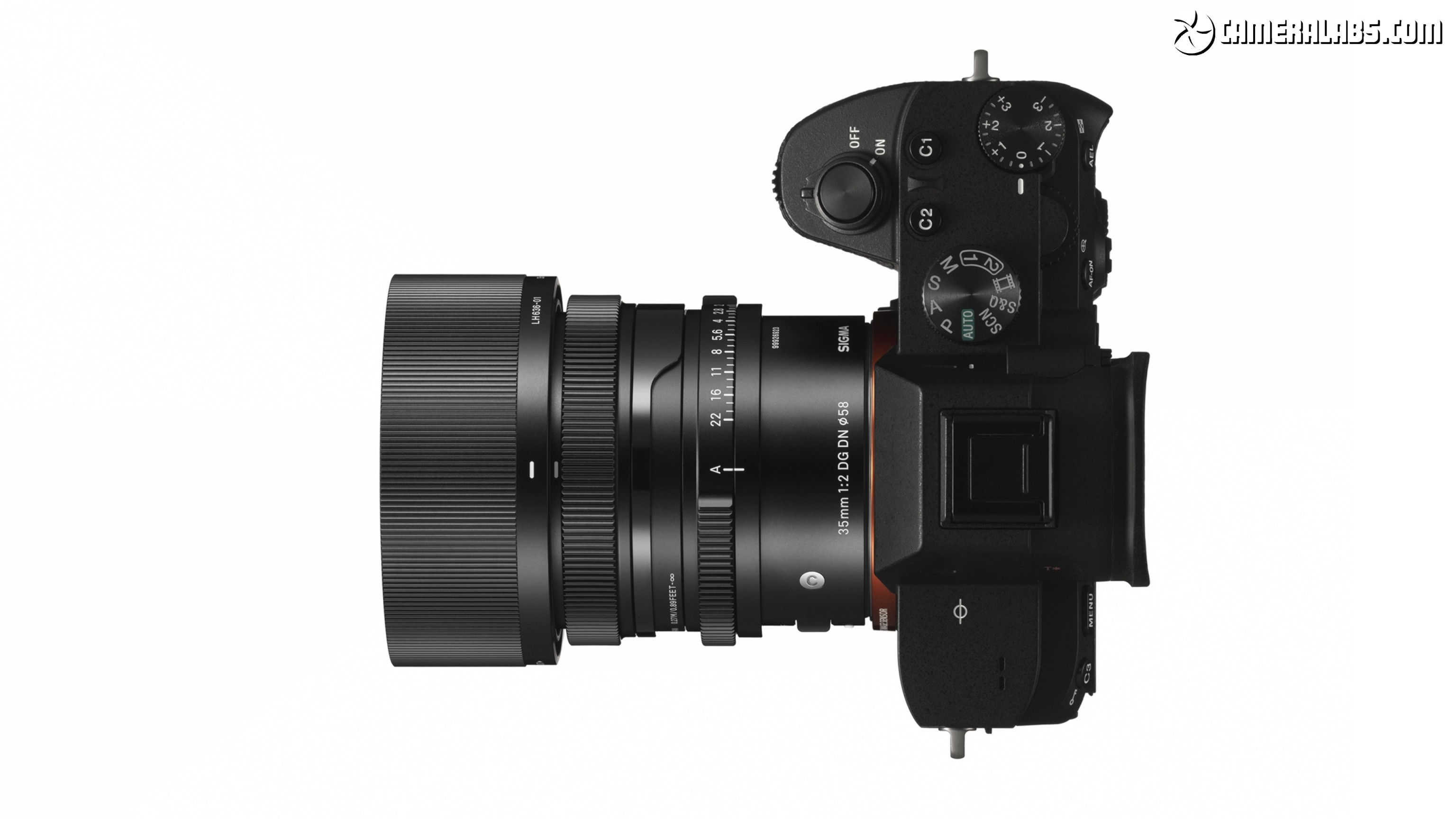
Above: If you're a Sony owner, fear not, for all my optical results here equally apply to the e-mount version, and again as a final production model, we're going to be taking a close at hand look at the quality.

Above: But first the design which represents a departure from most ultramodern mirrorless lenses, especially for the Sony and Leica mounts. For the I series, Sigma's opted for compact barrels with metal construction that are reminiscent of vintage lenses from the outside, but with thoroughly modern optics within. They remind me of a cross between a Zeiss Loxia and one of Leica's standard lenses, which should certainly increase the appeal to owners of Leica L-rise bodies.

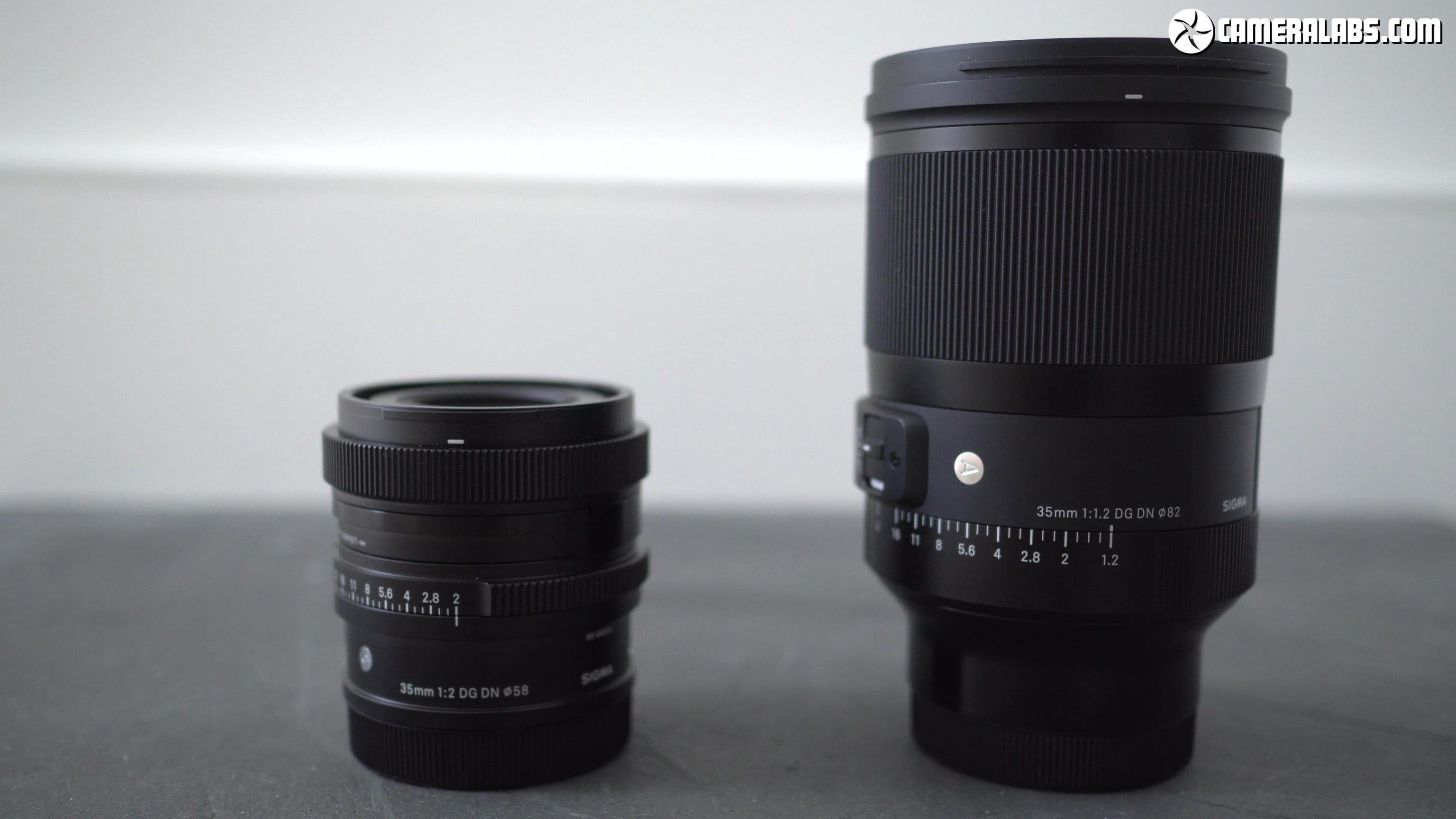
Supra: The Sigma 35mm f2 measures just 70mm in diameter, 65mm long and weighs 325g which may be 45g heavier than the Sony 35 f1.8 but both remain small and light lenses that are everlasting matches for compact bodies. I personally preferred the metal construction and ex post facto styling of the Sigma, and like the Sony it's also dust and wet resistant including a rubber grommet happening the mount. In terms of controls there's a chunky switch for manual and autofocus, a clicky aperture call that worked on my fp and S5, and a narrow but very smooth aided manual focusing ring. Meanwhile the filter wander measures 58mm. I should also mention focus was essentially silent, and when shooting photos it felt swift and accurate.

Above: Barely compare it to the heft of Sigma's new native 35mm, the mighty f1.2 Artwork which measures 88x136mm, weighs 1090g and costs around 1500 dollars or pounds. I adore the potential of the 35 1.2, but it's a large lens to suit, making the 35 f2 a much more practical, non to mention more affordable walkaround option.
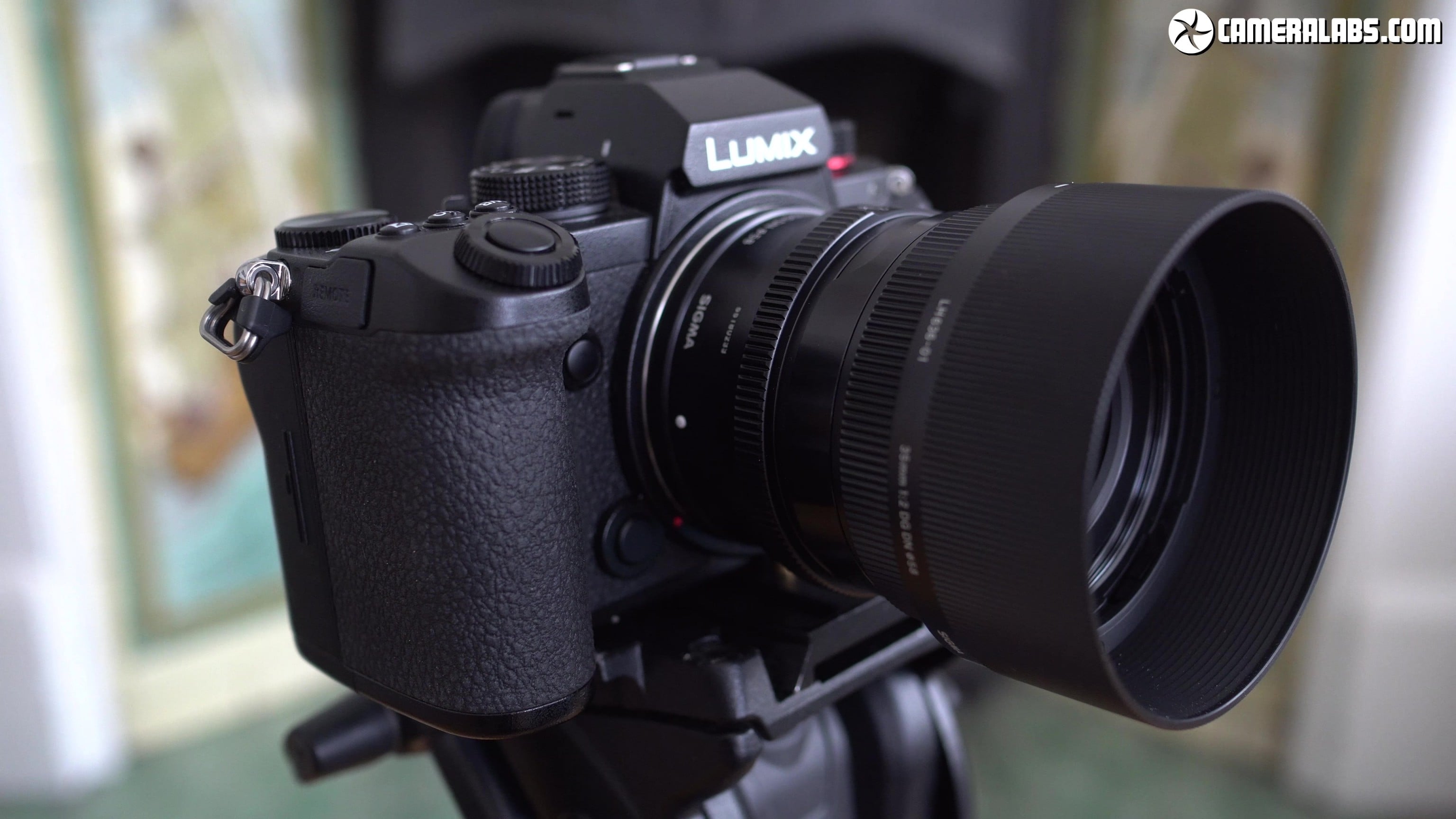
To a higher place: Sigma's also had some fun with the accessories, supplying the 35 f2 with a classy metal lens hood that continues the ribbed styling of the lens.

Above: It also comes with not unity but two lens caps, a time-honoured impressible indefinite with the usual pinch spring mechanism and a new metal cap which uses magnets to last out in place. It'll hold firm during transportation, although can't be put-upon with filters nor well when the tough's committed. It's a play increase which adds to the personality of the I series, but I mostly cragfast with the hood and plastic cap for my clock time with the lens.

Supra: Now let's dive into the optical results which once again hold to the Sony adaptation. To test sharpness across the framework I shot this distant scene with the 35 f2 on a Sigma fp with the scene angled so that details ran right into the corners where lenses struggle the most.

Preceding: Let's take a closer take the centre of this visualise taken with the aperture wide-coarse at f2 and as you can control at that place's a lot of fine detail here.

Above: Closing the aperture one stop to f2.8 delivers a small hike in sharpness which doesn't improve any much as you close-down further, but overall I'd be very prosperous with the centre execution wide-open which you can see once more here back to the maximum f2.

Above: Straightaway moving into the corner, you'll see in that respect's no fogginess to complain about even at f2 and the biggest difference as I gradually conclude the aperture is a reduction in corner blackening delinquent to vignetting. As a sidenote, like nigh press mirrorless lenses, the I series exploits electron lens profiles to decline geometric overrefinement and reduce vignetting, so atomic number 4 sure to experience them enabled in the tv camera or your Birthday suit processing software. I confirmed they were working on my fp and S5 bodies for in-camera JPEGs.

Above: Let's now compare it to the 35mm f1.2 at f1.2 and the first thing you'll notice is how the f1.2 genus Lens is actually delivering a slightly tighter field of view. It's not unusual to encounte cardinal lenses of the aforementioned quoted focal distance really delivering slimly different coverage, and while it's non that important, I always like to include information technology out of interest.

Above: Now here's a close look at the centre of some lenses at their maximum apertures, and I'd say the 35mm f2 on the left is a tad sharper than the 1.2 on the right…

Above: although if you close the f1.2 model to f2, it takes a limited lead. Finally though not such to tell them apart here unless you're pixel-peeping.

To a higher place: Now for the corners of both lenses again at their maximum apertures, and I've cropped the same area of some images which thanks to the slightly tighter view of the 1.2 lens is showing a slightly different section of the subject. As you can see they'atomic number 75 both delivering a decently degree of detail in the corner and again there's petty to choose between them. Closing the 1.2 model to f2 reduces the corner darkening receivable to vignetting, only doesn't bring any advance to detail, so again I'm vocation it an approximate draw.

In a higher place: Close here's a portrait shot to try out them at a closer distance and to see the potential for blurring in the screen backgroun. First Hera's the 35mm f2 at f2.

Above: Directly for the 35 1.2 at 1.2 which was taken from the same put off where again you can take in the slightly tighter coverage of this electron lens. Both were taken with the Lumix S5 using face and eye detection.

To a higher place: Placing them side-past-position and the benefit of the larger aperture coupled with a slightly higher magnification unsurprisingly gives the 35 1.2 on the right the shallowest depth-of-field. The superior of the blurring, or bokeh, of the 1.2 lense is also more attractive to me, with softer edges and a inferior busy effect, but the 35 f2 connected the left is certainly up to of decent subject separation at this distance and both lenses are also delivering very crisp details on my eyes.

Supra: Closing the 1.2 crystalline lens on the right to f2 broadens the depth-of-field, bringing to a greater extent of my confront into focus but naturally reduction the size of the bokeh blobs. They're still a trifle larger than the f2 on the left due to its slightly greater magnification, but remain a little softer edged also. The 1.2 remains an astonishing lens when snapshot wide-open, delivering shallower depth-of-force field effects than most wide lenses. It really brings something special to events, but for me it's too hefty as a general walkaround lens.

To a higher place: Since the biggest sensory system difference betwixt the two lenses regards potential for depth-of-field, my third base and final comparison concerns bokeh blobs for closeups and rightfulness immediately you're looking the 35mm f2 at f2. Both lenses gratifyingly allow in good order close-focusing, with the f2 modeling getting as end as 27cm, which spell 5cm further than the Sony 35 1.8 is stock-still very useful.

Above: Now for the Sigma 35 f2 on the left and 35 1.2 on the right, both from the same length where again the 1.2 reveals a slightly greater magnification. Merely with both lenses set to their maximum apertures, there's no more competition for bokeh blob size with the 35 1.2 of trend taking a significant lead.

In a higher place: But as I close the apertures connected both, keep on an eye on the edges and shapes. First with the 1.2 closed to f1.4…

Above: And now with them both at f2. As apertures close, cats-centre shaped blobs generally become smaller and to a greater extent circular, although can also reveal the geometric shape of the aperture blade system in the lense. These shapes often become more self-explanatory the Sir Thomas More the aperture is unreceptive from the maximum value, which potty give more modest aperture lenses like the f2 an vantage Eastern Samoa at f2.8 for instance, IT's only closed by one stop compared to more than two stops on the f1.2. Ultimately the Sigma 35 1.2 potty naturally deport the shallowest depth-of-field, but the toll you pay is heft up and a literally higher cost. Bokeh fanatics will find it al dente to resist only most of U.S. would make up very satisfied by the results from the Sigma 35 f2.
Check prices on the Sigma 35mm f2 DG DN at B&H, Adorama, WEX or Calumet.de. Alternatively get yourself a copy of my In private book or regale me to a coffee! Thanks!Pages: 1 2 3
Sigma 35mm f2 DG DN review
Source: https://www.cameralabs.com/sigma-35mm-f2-dg-dn-review/


0 Komentar